


It is a situation we have all experienced: you are close to the end of your work, or in the crucial moments of a game, only to have your laptop battery warning flash up on the screen. You look around in desperation, but the only laptop charger nearby is for your flatmate’s Acer laptop, and not your Acer one.
But all laptops are the same, right? Not so fast: put that rogue charger down right now. Using another brand’s charger for your laptop may solve a short-term problem, but it could land you with a hefty repair bill in the long term.
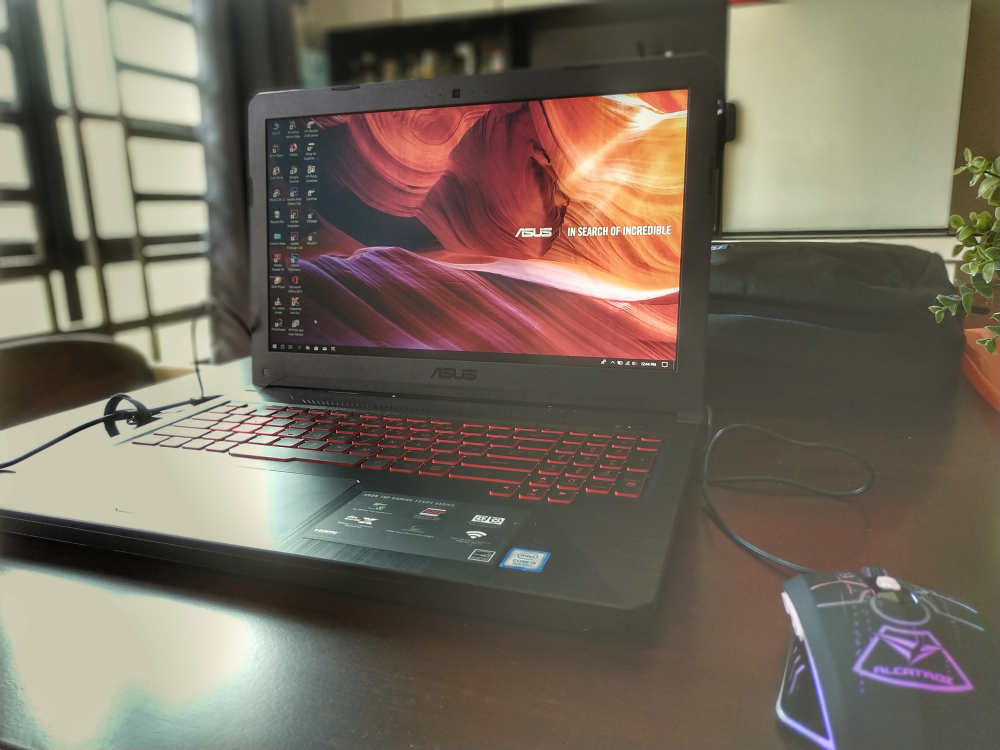
Why Shouldn’t You Use Another Laptops Charger?
There are a few reasons why using the charger for another laptop is a no-no, and we will explore these below:
Power Requirements
Different laptops have different requirements, especially in terms of the power they require. Large, hardcore gaming laptops will require a lot of power, and the chargers for them will be built to cater to this specific power need.
Using a charger that does not offer enough power can cause serious, permanent damage to your laptop battery, as well as other hardware on your laptop. This can be an instant reaction, or it can take a while to show up – in some cases, the first indication you will have that something is wrong is when your laptop no longer charges.
Voltage and Amperage
Another important thing to consider is voltage and amperage. Put simply, these are measures of electrical current, also known as the flow of electrons.
Voltage is a measure that refers to the pressure that allows the electrons to flow freely, while amperage measures the volume of the electrons. Essentially, an electrical current pitched at 1000 volts is no more or less deadly than a 100-volt current.
Even the tiniest changes in amperage, however, can make the difference between lids and death if you are unfortunate enough to receive an electric shock.
If we consider a river, we can make the analogy to understand the basic principles of electricity. Here, voltage is the steepness of the river, while amperage is the volume of water that is actually in the river.
If a river has high voltage and low amperage, it will be narrow, small, and almost waterfall-like in nature. A river with high amperage, on the other hand, has a lot of water – you can drown even if the speed (or voltage) is slow.
So what does this have to do with your laptop charger? Ultimately, the voltage specifications of both your laptop and charger will also need to match in order to charge the laptop without damage. In most cases, modern laptops will require a minimum voltage of 19.5v.
If then, you try to use a laptop charger with a greater or lower voltage, you will not be able to charge the device. In the best-case scenario, the laptop simply will not charge.
In the worst-case scenario, you will fry your laptop beyond repair. Note that amperage is not as important here; this number simply dictates how fast or slow your laptop charges. The lower the amperage, the slower the charge.
Proprietary Hardware
Ultimately, laptop chargers are not big on collaboration, and they are not designed to mix. Using an Acer charger for an Asus laptop is a surefire way to cause serious damage to your laptop, and can totally destroy the battery.
Even if the charge has an adequate amount of power, your laptop battery is likely to reject the new charger, simply because it does not recognize it as coming from an approved source.
In some cases, sticking to the same manufacturer – for example, using another Asus charger for a different model – can work, but it is best not to take this risk unless you have the cash to replace your laptop.
Risk of Fakes
One of the biggest risks that can come with using the wrong charger is that the one you select could be a fake. In some cases, it can be cheaper to opt for a laptop from another brand, but this could be a cheap knock-off product.
Not only is this unlikely to supply the amount of power you want, but it could cause damage to your battery.
Output Tip
You may also be limited in changing chargers thanks to the output tip – these are not all created equal. Many older laptops will use a traditional barrel tip – this is the standard barrel connector, with a hole in the middle, and measures 5.5mm x 2.5 mm.
It is important to make sure that the top of the charger matches the port in the laptop to allow them to communicate effectively – this will not occur unless the right charger is used.
In some cases, you may find a charger that fits, but it is unlikely to actually provide any charge, as it will be able to tell that the charger you are using is not the correct model.
Polarity
The final area to consider is polarity – the polarity must match in both the charger and the laptop charging port. In most cases, you will see this on the barrel connector – the negative will be on the outside, and the negative on the inside.
Using the wrong polarity, as you risk doing with an Acer charger, can cause damage to your battery and the hardware of your device.
Final Thoughts
Ultimately, using an Acer charger to charge your Asus laptop is not the best idea. While there is a chance that you will be able to access a tiny amount of charge and complete your task, it is much more likely that you will fry your laptop battery and hardware.
Whether you are considering a new charger to invest in, or simply considering grabbing a friends for a fast boost, the majority of the evidence seems to suggest that this is not a smart move- wait until you can get your hands on the right Asus charger for your machine.
from https://ift.tt/3oDljbT



0 Comments